Vertebroplasty / Cementoplasty
A safe and effective minimally invasive technique to treat osteoporotic vertebral fractures. Performed under precise radiological guidance by an expert team.
What is a vertebral compression fracture?
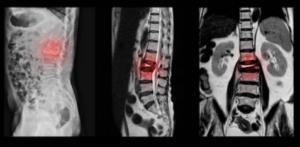
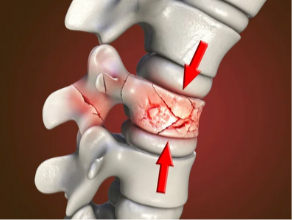
Vertebral compression fractures are common in older adults. They correspond to fractures of the vertebral bodies, most often due to osteoporosis (bone fragility from demineralization) and sometimes secondary to a bone lesion.
These fractures frequently occur after a simple fall from standing height.
1 in 4 women over 65 will develop an osteoporosis-related vertebral fracture.
What is vertebroplasty?
Vertebroplasty, also called cementoplasty, is a minimally invasive technique initially developed in the mid-1980s. It consists of injecting medical cement into a vertebra.
Kyphoplasty is a variant of cementoplasty aimed at restoring vertebral height in addition to cement injection.

Which patients are candidates for vertebroplasty?
The main indication is a recent vertebral fracture (also called a compression fracture), most often of osteoporotic origin.
Other indications include:
- Osteoporotic sacral fractures
- Painful malignant bone tumors
- Certain benign tumors (hemangioma)
What are the goals of vertebroplasty?
1) Pain relief
Any fracture causes painful symptoms. Vertebroplasty allows rapid pain improvement and withdrawal from analgesics, thereby avoiding adverse effects or problems related to polypharmacy.
2) Stabilization effect
Any fracture causes more or less significant deformity. Deformities of the spine, often compared to the "mattress" of the human body, can have serious consequences: scoliosis secondary to deformity, chronic pain, reduced respiratory capacity, loss of independence, and muscular disorders. Early vertebroplasty or kyphoplasty helps prevent all these complications that impact quality of life.
3) Rapid return to activities
Pain disappears quickly after vertebroplasty (the same day or the next day), allowing the patient to get back on their feet. The goal is to avoid bed rest, which itself is a source of complications.
How is vertebroplasty performed?
The procedure takes place in an interventional radiology suite meeting hygiene standards. Total duration is approximately 1 hour.
- The patient lies on their stomach. A micro-incision (<1 cm) is made in the skin to allow passage of a cannula.
- Under continuous radiological guidance, cannulas are inserted into the vertebra.
- Once in place, cement is injected in liquid form until satisfactory filling of the vertebra is achieved.
- The procedure can be repeated at other levels in case of multiple fractures.
Is it painful?
No. The procedure is performed under sedation with an anesthesiologist present.
If general anesthesia is contraindicated, the procedure can be performed under local anesthesia with the same results.
What is the recovery like?
Immediate recovery: The patient must observe strict bed rest for approximately 2 hours while the injected liquid cement hardens within the vertebra. After this period, the patient may get up.
Discharge home is planned either the same evening or the next day, depending on the patient and the care facility.
Long-term follow-up: In the context of osteoporotic fractures, it is essential to be managed by rheumatology colleagues for a comprehensive assessment of factors that may have contributed to the fracture. This includes blood tests, bone densitometry, and correction of certain deficiencies.
20% of patients will develop a new vertebral fracture within the following year.
Are there complications?
The risks of vertebroplasty are low but exist, as with any procedure.
The main complication is related to cement leakage outside the vertebral body. When it occurs, it is most often asymptomatic. The best way to prevent these leaks is real-time monitoring of cement injection under radiological guidance.
Other complications include pain at the puncture site, infection, and hematomas along the tract.
Are there alternatives?
The alternative to treating osteoporotic fractures with vertebroplasty is analgesic treatment that may include morphine, rest, and wearing a brace for 6 weeks to 3 months.
What are the advantages of vertebroplasty compared to other techniques?
- Vertebroplasty provides rapid, almost instantaneous pain relief.
- It allows patients to discontinue analgesics and their side effects.
- It enables a rapid return to activities, unlike a brace which must be worn for 6 weeks to 3 months, often with poor tolerance and discomfort.
- Back musculature, often neglected, is not affected thanks to early mobilization, whereas immobilization has a harmful effect.
- The fracture is stabilized immediately, whereas brace treatment can fail to achieve consolidation.
Treatment of osteoporotic fractures with vertebroplasty reduces mortality risk by 22% compared to untreated patients. Results from a study published in 2020.
Does vertebroplasty cause other fractures?
This is a commonly held belief without scientific evidence (VERTOS IV study). In our practice, we sometimes observe new vertebral fractures occurring after vertebroplasty. The confusion arises from the fact that 20% of patients who have had a vertebral fracture will develop a new fracture within the following year, with or without vertebroplasty.
This phenomenon is well known: the "fracture cascade." To prevent it, it is important to be managed by a rheumatologist to address the underlying disease, osteoporosis.
Ready to book an appointment?
Contact us to discuss your situation and schedule your consultation
Book an appointment